In the End it Catches Up with You

I am at present paying dearly for not reading the fine print.

I work at a large company, and we have SharePoints. We have more than one. Just in my group I think we have four. In some cases, the SharePoints are tied to a Teams instance, which means the security for access to said SharePoint is driven by membership to the Teams team. Because Teams does not restrict membership to security groups and instead does membership to individual humans, this can make for an administrative nightmare.

At any rate, I am having to move things from Teams-SharePoint-Locked-Folder to Regular-SharePoint-Locked-Folder and in order to do that there’s this handy-dandy little “move” function right at the top navigation. You can select all manner of things, select “move”, tell it where you want to move it to, and just hit go. It’s just that easy.

Except it is not.

Because the move functionality has unexplained and unannounced limits – at least no process on the site tells you about those limits, you have to actually RTFM, which is found at the very bottom of this page. Those limits are both in file size, number of files, and total file size. I did not know this two days ago, when I hit “move” and walked away thinking in 30 minutes everything would be magically done.

Instead, what happens is SharePoint looks at its old location (hm…) and at its new location (hm…) and starts to build out the folder structure in the new location before moving files. So that when it chokes — and it will choke — you are left with folders that are empty in your new location, and all your files still sitting merrily in your old location. Then, if you try to move folder by folder, it will give you a duplicate of your new folder, in your new folder location (e.g., now you have Folder and Folder1). Seamless transition this is not.

I am a victim of my own shortsightedness, and now I must pay – delicately and carefully deleting empty folders, then manually chunking and moving files, all in an environment where people are trying to use said files. Don’t even get me started on the One Note. I am, at present, 9 hours into this endeavor (of course I am multitasking).

The thing is, we set ourselves up for failure – or headaches – when we don’t read the fine print. Reading the fine print takes time, and effort, and sometimes it is incredibly boring, and often complex: it’s the written equivalent of bran. We all know we should do it and some of us do but you only get the benefit at the very end of the process (and depending on how long you waited to do it, it can be a really messy end).

We’re in that time of year (at least at my company) where we are evaluating again: ourselves, our teams, our output, our goals, our objectives, how we measure people/teams/features and how we should think about strategy. In times where there is Too Much Going On it is tempting to have the mindset of “I’m sure this will just work” because 1. in so many cases it just does and 2. the idea of investing the time into reading the documentation “just in case” seems limited. Until the end.

Choose your shortcuts wisely.

Confirmation

I grew up in Southern California until I was 12 and part and parcel of that experience included a regular round of field trips via our school: to the Getty Museum, to the Zoo, and to the La Brea Tar Pits.

The La Brea Tar Pits are in, cleverly enough, La Brea, California (formerly Rancho La Brea) and are as advertised: several pits of bubbling black tar (and one bubbling black lake of tar) that have been around millions of years. As such, they are a treasure trove of fossil record in that part of North America – thousands and thousands of fossils have been found in the tar pits, including my favorites: Mastodons and Saber Tooth Tigers.

I mean, when you’re a kid, are you going to be wowed by the pinecone they found in there or the small bird bones? Or are you going to be wowed by the giant, large, toothed creature whose skeleton now rises over you as you read the little plaque?

I remembered six specific things about the tar pits: the wall of dire wolf skulls (they’ve found so, so many), the giant Mastodon (and accompanying Mammoth) skeletons (so you could compare them!), the black iron fencing outside the pits so you can “get close” without being “in danger”, the interactive pulley system they have with large and small footprint cylinders stuck in tar (so you can do your darndest to pull them out and discover that the wider the footprint the more stuck you would be), and the La Brea Woman.

They’ve only ever found one human skeleton in the tar pits, and that was of a woman. I remembered this, because there was an exhibit where if you looked at it from one angle you saw a human skeleton (hers), and if you looked at it from another angle you saw an artists’ representation of what she may have looked like. (They still have one of these perspective-view thingies for a Saber Tooth Tiger and it’s cool). As a kid it left an indelible impression.

I had recent occasion to revisit the Tar Pits, for the first time in something close to 40 years. Fortified with these memories I checked them off as we went through: yep, there’s the iron fence and the bubbling lake tar pit. Yep, there’s the large skeletons rising over us. Yep, there’s the dire wolf skull wall. Did I try to pull the cylinder with the biggest footprint? Absolutely. And while I did find the perspective-view for the Saber Tooth Tiger, I found no La Brea Woman.

Well, I do have lapses in memory, and maybe the exhibit I was remembering was from somewhere else. But it *felt* wrong that that box could not be checked. It tickled the brain.

You know what didn’t tickle the brain? The smell of the tar pits is akin to fresh tires, but like, a LOT of them. I didn’t remember that. The bulk of the exhibits are really the tar pits themselves, in a winding outdoor walkway of the park. I hadn’t remembered that either. The actual inside museum is not as “big” as I remembered it, the scientists in the lab (there’s one of those “hey look at our scientists doing lab things”, like in Jurassic Park) looked more like regular people, the gift shop treasures were okay but with adult eyes I know that I do not need a fridge magnet that says “Live Laugh Love” with a mastodon face on it. (No. Not hyperbole.)

I was only in California for two days, one of which was occupied already with an important endeavor (if you can, support your local community college), and for the other my dad asked me what I wanted to do. “Let’s go to the La Brea Tar Pits” was my reply. It is both what I remembered and not.

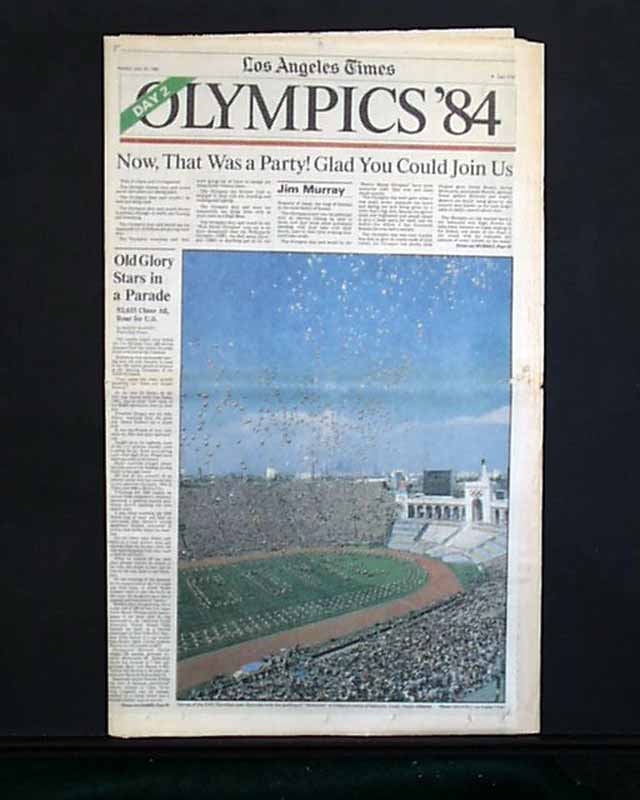
Memory is a funny thing. It latches on to things, burnishes them and stores them neatly into little labeled shelves in your brain… for some things. For other things it evaluates the inbound information, says, “meh”, and dumps it. The La Brea Woman was on a neatly labeled shelf, and the smell of the tar pits had probably been ejected from my brain each time I visited as a kid. The mind takes in what it thinks will be useful (I didn’t quite go this far in school, but I think there’s some play of what hormones are running around in your brain when the memory is being stored) and in my case it absolutely ejects the rest. My parents, who are older than I and have more cause to forget things, can remember crisply things from when I was 8/10/12 and into and up to when I was 18 that I just do *not* remember. Not the faintest of a hint of a memory: my brain ejected it as “not useful” and went on its merry way. But I can remember the Sunday edition cover of the Los Angeles Times in 1984 (I was 10) for the Olympics, and the tan 2″ tile on the backsplash as I looked at it, and that it was breakfast time. What possible use that has is beyond me.

Memory relies on an incomplete and biased data set: for better or worse, and with no malicious intent, the data stored is “curated” by this proxy self and sometimes you don’t get a choice. When it comes time to recall and to make forward-looking decisions, without additional data, the memory can lead you to a different destination.

Now, I’m NOT saying I wouldn’t have selected the Tar Pits if I had looked it up online and gathered the additional information that in 2004 the museum removed the La Brea Woman exhibit in order to be sensitive to the native population and culture of which she was (which wasn’t quite clear anyway and the artist rendering was also perhaps stylized/influenced). I am saying that took me going there, walking through the memories and matching it up to reality, to seek the additional information (when I got home) of what happened to the La Brea Woman.

Relying on memory is a useful capability we have in the absence of additional objective data — or even shared memory. It cannot be the only thing we rely on when making critical decisions, should we have the luxury. “It’s okay we can dig for a new bush there I’m pretty sure I remember there aren’t any cables/lines in that part of the yard”; “I’ll get this bottle of hoisin sauce at the market I’m pretty sure I’m out”; “I remember this code does XYZ and there’s just no way we can have a memory leak…” Famous last words.

It is hard, in the moment, to remind yourself that a brain and memory can be fallible, even for those of us with a reputation for near-total recall (it works *great* when it’s in a topic I care about). It can be humbling to have to say, “I don’t know” or “I am pretty sure I remember X but let me check on that”. It can also be freeing to do so.

Re-reading, double-checking, and cross-referencing can take some time. If the worst that happens is your memory is confirmed accurate? Well, that’s a nice confirmation to have.

Marketing

My forte is the fundamentals or “taxes” of doing business: does it work, is it secure, is it documented, can we measure it; that kind of thing. While I *can* be the product manager (the button is red, it says “Happy Birthday” when you press it, 95% of our competitors have similar buttons) it’s not my jam. On the flip side, I am (almost unnervingly) incentivized by theoretical “points” – closing my health rings on Apple Fitness, collecting “bonus stars” at Starbucks, attributing “levels” in various apps. None of these things actually translate to substantive value (you have to accrue a huge amount of Starbucks stars to actually get value from them), but nonetheless I am driven to complete them.

When a marketing endeavor ends up in my email that I think is completely ridiculous, I have to share.

For background: I have, as one is bound to, a collection of low-grade but annoying health issues. Because I have these, LabCorp knows who I am, and I have an “account” with them. The account was created to simplify data consolidation and billing. The account was not created to get marketing emails.

In my inbox today is a cheery email from LabCorp letting me know that we get an extra 24 hours in 2024 (leap year), and then asks me if I’m going to make the most of it. It then proceeds to give me the following “ideas”:

  • try a new fitness class or workout
  • meal prep
  • book an overdue doctor’s apointment
  • order a labcorp on demand health test
  • go for a walk, bike ride, or hike
  • download a meditation or sleep app
  • write out my latest health goals
  • look up a good stretching routine

It then invites me to “shop tests”.

My brain hurts.

Let’s start with the premise that, having an “extra” 24 hours this month, I should use it in wise and healthful ways. I could point out that I can do these any day of the month of any year, and the “extra” ness of this 24 hours is subjective (e.g., Feb 29 lands on a working day). But okay, insofar as we look at suggestions on what to do with “extra” time, and the source of the suggestions being somewhat health related, that’s fine.

Nestled among the “meal prep” and “meditation” it invites me to order an on-demand health test. It does not invite me to check in with my doctor(s) as to what test would be appropriate for me, which ones I may already have covered through them, etc.; no, it wants me to do it. No more “ask your doctor if XYZ is right for you”, I guess.

Curiosity got the better of me and I clicked “Shop Tests”. Would you like to know what is accessible here? I can order a Men’s Health Test for $199, or a Women’s Health Test for $199. I can get a quantitative pregnancy test for $49, or a “Comprehensive Health Test” for $169 (how this differs from the Men’s or Women’s health test is not immediately visible), a testosterone test for $69, a thyroid test for $89, and on and on. Wanna check your magnesium? Your micronutrients? Your colon (why yes there is a “colon cancer home collection test”)? What about if you think you may have menopause, or tuberculosis? Vitamin D, B12, a urine test, it goes on quite a bit. The only information about these tests is the title, the price, and “add to cart”. You can, however, click on the test without adding it to cart, to read up (for that test alone) what it contains. (If you want to compare the Women’s Health Test to the Comprehensive Health Test then be prepared to copy/paste).

This strikes me as an invitation to one of two things: hypochondria or specious complacency. I have a degree in Zoology, not medicine or pharmacology, and I have no business ordering tests and “identifying the results”. I have no context in which to interpret them (short of spelunking WebMD or the Mayo Clinic) and at its extreme I can use a home-based home-interpreted test to either make myself feel better (devoid of actual medical review) or worse. I wonder how much GP’s love this.

And yet, it’s a shiny email, all done up in comforting, reliable blue, with stock photos of people doing healthy things and being healthy people, and don’t I want to do that? It begs me to use my Leap Day wisely. It reassures me it will provide peace of mind. Some bright product manager looked at the range of tests LabCorp supplies, and figures that with its reassuring and proactive “to do” list, its call to action, and a collection of price points ending in 9, that more money was to be had in a healthcare system that already specializes in separating people from their cash. This, at a cost larger than those in socialized medicine countries engender, none the least of which is because they don’t do a bunch of extra tests simply because they can.

I have hit “unsubscribe”, a small victory, for me.

Are you there, Bob?

I just sent an email to myself.

There’s kind of a lot happening right now. I work at a major tech company that is both growing and cutting back (looking at our stock valuation vs. our layoffs notice is an interesting, eye-crossing experience). My house is a little upended with some projects, and there are equally intricate family-dynamics things (all goodness just lots of moving parts). I also signed on to be a board member of the Washington Women’s Foundation and that adds another avenue of effort. If anything, work is the most relaxing part of my life at this moment, and that is saying something.

At 5am this morning my eyeballs snapped open, because of course they did, and here with my coffee I am sorting through the different mental threads and trying to find order. Coffee helps.

One of the things that happens semi-regularly where I work is a re-organization of the humans: upon evaluation of the market conditions, or assimilation of another group, or the departure or arrival of New Hotness, we split apart and reassemble our workforce like so many bucky balls. There are benefits and there are detractions: on the one hand, you get cross-pollination, you discover that the tech world is really small (I frequently find myself working again with people I worked with 5 or 10 years ago), you get new technology to play with, and so forth. On the other hand, the relabeling and renaming of things, the re-explanation of charter, and the re-divvying of workloads and requirements can make some apprehensive, some frustrated, and everyone a little less productive (for a time).

And so, this morning as I parsed through mails and thought about impacts, I started to pen a note to our leadership team outlining some of those impacts that would need attention, if not urgently. Renaming and refactoring things has implications to identity and access, and picking through how we can both stop the goat-rodeo of reacting to these reorganizations with short-term solutions for those, while also finding something that is efficient to execute, takes brain space. Again, coffee helps.

About two paragraphs into the email (ya, I know) I changed the “to” line and sent it to myself. It’s not fully baked, and if I send this thing out, the reaction from the recipients is likely to be, “ok, and?”. I don’t want to add to the churn, I do want to think about it more, but if I don’t send this to myself, I’m likely to push it off or at least not have the start of the salient thoughts written down somewhere. It needs to be in my inbox, because I need to consistently reflect on it.

Two months ago, some enterprising person managed to acquire my work email and my personal credit card and wrought some not insignificant damage, the legacy of which is my spam folder is legendary and my inbound email is a Bandini Mountain through which I must parse. Hyper-vigilant junk mail filters help, routine email hygiene helps, but it’s still a volume of stuff to wade through each morning to find the “real” things.

And I have just added to that pile.

Again. Coffee helps.

Engineering

It’s not often that I’m struck by something on LinkedIn that makes me think. That sounds bad; let me rephrase: it’s not often that I’m struck by something on LinkedIn that leaves an impression that lingers in the back of my brain after I leave the page. Usually, it’s a celebration of folks getting new jobs, folks leaving old jobs, folks looking for jobs, and a smattering of posts recapping job-like events. Sometimes there are adages and platitudes and we can all resonate with that image of the bent tree that ultimately succeeded or whatever.

It’s Boxing Day, or the Day After Christmas, and I’m poking around corners of the internet while waiting for the Nth load of laundry and figuring out how I’ll keep myself occupied for the next few days (yes, privilege). And so I found myself scrolling on LinkedIn, for this post by Nick Costentino. I don’t know Nick, we are “once removed” via a connection I have (or perhaps more than one, that’s the nature of LinkedIn), but this title, and this post, stick in my brain: “As a Software Engineer, you don’t need to know everything.”

Nick goes on to illustrate that good software engineering is not about having all the answers and/or “just knowing”, it’s about problem solving and being resourceful. It’s about having the *framework* (not in the software sense but in the “I can wire my approach to this” sense) to identify and solve problems. And my off the cuff reaction (which I commented) was: this isn’t just for software engineering; this is for life.

Depending on your geography, family affluence, and other circumstances, you got an education in your formative years. That education may have had you learning cursive and doing geometric proofs and diagramming sentences and such, but for anywhere from 10 to 15 years you were formally trained in Things Society Felt You Should Know. A *good* education didn’t just leave it at that, a good education taught you how to work with circumstances that were not solvable by rote memory: what is the scientific method, after all, if not “f*ck around and find out”? The idea being that instead of churning you out at the end of high school or college/uni with everything in your brain and it being 100% “full”, you were instead armed with concepts, ideas, and a method of approach to solve problems and self-manage.

I am not saying that that is the way it is for everyone — “No child left behind” left a *lot* of kids behind, and the current systems in place are highly differential depending on socioeconomic factors. Broadly speaking, however, people come out of high school and/or further education with the impression that they should *already* know everything and it’s just a matter of grinding your way to the “top” (whatever top that may be). And that the path is set for one’s career, and intransigent.

Careers are fungible things, and so are brains.

You will not, ever, ever, ever know all the things. There will be edge cases, there will be corner cases, there will be So Many Times you are working with Not All the Information and frequently it will be because either someone you were relying on for it didn’t know or because some process or person thinks you didn’t need it. Or the systems in place were developed by someone who left five years ago, and no one can read their notes/handwriting (if indeed any were left). This isn’t just in the software engineering world: I have had the luxury of having a few different “careers” in the last 30 years, and in every one of them I can point to a circumstance in which the person who should have known everything (the Vet, the Pharmacist, the Travel Agent, the Manager, etc.) did not know everything and what we all had to work with were some clues and guidelines and our very best efforts. Anyone who has been handed the curveball of an unexpected medical expense, your car breaking down, mystery crumbs on your kitchen floor, or any myriad of things in Being an Adult in the World has experience with the “I don’t have all the information, but I have to deal with this” scenario.

Education is *a* foundation, from which your brain gets wired (with experience) on how to approach the crazy that life throws at you. May your frameworks be resilient and resourceful.

Controlled Ascent

Decompression stops can be needfully boring.

When scuba diving, if you go past a certain depth, you have to “stage” your ascent every so many feet for a period of time, so you don’t get the bends when you surface. I have a high regard for my own skin so I don’t quibble with this and will sit at a decompression stop for however long it needs be; and sometimes just a bit longer.

In the mid-2000’s (somewhere in there, the memory is fuzzy) I was on a dive trip with friends in Mexico, and the order of the day was to dive with Hammerhead Sharks. I love sharks; I think they’re graceful, efficient, and I enjoy their variety of size and shape and color. Shark diving? Sign me up. (Just none of that “let’s chum the water and put you in a cage” stuff). To dive with the Hammerheads, you have to go deep-ish. If I recall correctly, we were clocking in somewhere between 120 and 160 feet. For reference, a Basic Open Water certification will get you certified for 60′, and part of that certification requires you do a “free ascent” – meaning you take one breath at 60′ down, and then ascend (carefully exhaling the whole way) for 60′ without taking another. So we were a little deep.

I remember the decompression stop had me holding on to a guideline from the boat, probably the anchor line. My dive buddy was slightly below me on the wire and in the open water, the only view was the vast blue of the ocean; all the sharks were at depth. It was quiet, it was peaceful, it was … utterly boring.

For however long of a decompression stop I had to be at that place, I was staring out at blue nothingness, literally forced by physics and physiology to stay in one place and do essentially nothing but breathe. I was still “on the job” — the dive was not complete, it’s not like I could nap or anything, but I was, at least a little bit, removed from the “work” of the dive. In 20 years of diving, this is the only decompression stop I remember.

I write this from Arizona, visiting my parents, and it is NOT boring, but it is a decompression stop, for me, from work. I’m not 100% off, but I’m not 100% on, either.

Inasmuch as I would like to be 100% off, I need this decompression stop, before surfacing and heading into a real vacation; I have a hard time letting go of work things, and need to double check multiple times for my own sanity: did I finish this thing? Did I pick up this ball? Did I put this to rest, or at least to rest enough to wait for the New Year?

Somewhere along the way to now, I started taking the day off before a trip and the day off after, to allow for a similar staged decompression: it’s not like you’re still on vacation those days, rather, those are the days you set things “to rights” so you’re ready for the next stage. Piles of laundry and an empty fridge and hundreds (if not thousands) of emails feels rather like the bends otherwise.

My advice, therefore, is this: do your decompression stops. They can be boring, you may feel afloat, you may not have the ability to immediately communicate to your buddy and you may be eyeballing your air, but they are needful.

Limping Across the Finish Line

(I’m fine.)

Every year I get to the Thanksgiving Holiday and the urge to Wrap Up All the Things intensifies. The proximity of the end of calendar year means that if you want it done (whatever “it” is) you better get on it because there’s not much year left. As artificial boundaries go, it’s swell.

This year there are so many changes (and yet so many things the same) that I am absolutely, positively certain I have dropped one or more balls. Some ball drops I know about: I had a whole side hustle that I created two years ago and had been steadily working on, abandoned earlier this summer (and will probably get picked up in the zeal of the “New Year”). Other ball drops I’m pretty sure I’ll find out about… later.

The problem with me (the problem?) is that I am *really good* at planning things out for everyone, including me, except with the understanding of what kind of time I’m dealing with. For example: we’ll get into that gentle lull of the Twixmas week, and I’ll look around at all the things done and all the things to-do, and I will look at my *current bandwidth that week* and maybe (speciously) dollop in the expectation of say, “20% busier than right now”, and sign up for more things. Because I have so much spare time, *right then*, see?

Somewhere around March it catches up with me. Earlier in the year two peers at work staged an Intervention and while I am forever grateful my inability to properly manage my time should not be their problem. Changes are made, plans are adjusted, by August I’m right back to where I was the previous winter: everyone else’s vacations means a natural lull in things which in turn makes me feel like I have more time than I do, so I dust off some of the previously dropped balls and start playing with them again.

By the time we get to the Thanksgiving Week, the immense relief at the prospect of three working days with *no meetings* (well okay two but it’s fine) is whelming. I start to pre-game the end of year stuff: I’ve started going through my junk mail and unsubscribing, I’ve started combing through the backlog and reorganizing it, I’ve started Thinky Papers and Closet Scrutiny. None of this helps me in discovery of *which balls I have dropped*, because I cannot disturb the natural process that will allow those to surface at just the most inconvenient time, later.

When I was running (I have reduced that – no more half marathons, the body does not do the things it used to) I would occasionally sign up for something and then fail to train properly for it (or unforeseen circumstances like a broken toe or such would get in the way). The fact that I had *paid for entry for the run* as well as a stubborn “You do what you say you are going to do” mantra would have me out at the start line, with all of the other freezing people, without regard to my insufficient training. Taped knees, ibuprofen, a decent music selection, Gu, and stubbornness would get me about 10 miles, and after that “it’s just 3 more miles”. I’d limp across the finish line, with a time that could only be described as “hey at least you finished!” and tell myself I’d checked the box. That I could have checked the box in a better fashion had I properly trained or devoted the right amount of time would be the nagging thought in the back of my head, but at least I’d finished, albeit limping.

As we head into the final five or six weeks of the year, I know this: it’s just 5 or 6 weeks. I’ll cross the finish line. And at least I will have finished, albeit limping.

Gap Analysis

I play a lot of Tetris. Cascading four-block shapes that have to be fit “just so” with one of two goals: either maximize your “points” (in which case your strategy is to build up four lines and then complete them by slotting a final piece in) or maximize the number of rows you exhaust (in which case your strategy is to complete a single line as often as possible). As you play either the cascade speeds up or impediments are put in your way to make it hard to complete rows. (FWIW, Tetris appears to be licensed out to a bunch of different entities and so your version may vary). I will play three or four rounds transitioning between “work brain” and “home brain”, a way to “accomplish” something, much the way finishing a cup of coffee and working out in the morning means I have “accomplished” something and/or doing a load of towels means I have “accomplished” something.

The thing is, as you progress in Tetris the speed and/or impediments do increase and so you rarely get nice, neat complete rows out of the gate (towards either goal). There’s always a gap and you can choose to ignore it (build nice, neat rows above it) or engineer towards it (what do I have to eliminate to get that gap addressed). If you are the type of person who likes everything “just so” you may find yourself using that second strategy and occasionally to your detriment: if you employ the “remove all gaps” strategy, you are giving up on “build up solid rows” strategy.

Of course this is like work.

I am a “Technical Program Manager” – but I expect this is observed and encountered by “Product Managers” and “Software Engineers” and pretty much any other role in which you have to coordinate sixteen things in order to deliver A Thing. Out of sixteen things, four will work perfectly well and four will work moderately well and four will be okay-ish and four will be an abject nightmare of permissions, architecture, personalities and/or randomization. (Your proportions may vary, your encounters will not). You can focus on those last four or you can work around them, but you will rarely, if ever, encounter a program or objective that does not hand you gaps through which you must strategize.

It’s frustrating. It’s also a muscle to build, because the nature of the world we live in now is that things are increasingly more intricate even while we strive to have things like AI and ML make things easier; I would posit that the development of AI and ML solutions have not been easy for those who *build* them. As our careers and technology progress, the blocks start falling faster, and the obstacles increase; and hopefully we get more agile and effective in dealing with them, because they continue.

Or we give up and go do a load of towels.

Competition

I am very competitive, and I don’t compete with you.

I realize that may be an aggressive statement so allow me to explain I’ve just had an epiphany, one marked from extremely privilege and pique, and I’m not particularly proud of it but I’m glad I know it.

My Apple Watch died. (I realize this is a privilege problem and it just helped me understand a little more about myself.)

In 2018 my husband got me an Apple Watch, because I had been using a Fit Bit reliably for years and am a sucker for metrics: how many steps, how many miles, how many runs. When “challenges” would get posted in Map My Run or in peer groups (e.g., run 1 mile per day every day for 365) I would happily accept. I’ve been tracking my food in MyFitnessPal for years too (yes, I’m aware that this gives Under Armor a ton of data about me). If I can measure it, I can improve it.

I am not fanatical about it and a couple of bouts with COVID and associated other health problems have clapped back, but for the most part, I have led a life, in the last 15 years or so, of “how much better can I get” (nestled against the reality of physical and mental limitation).

A couple of years back I upgraded my watch and was able to “keep my streak” — the Apple Watch has fitness rings that accrue information about how often you stand, how much you move, and how much you exercise — and you can extend the limits of those rings as appropriate. It also includes a monthly challenge that appears somewhat tailored to you based on your recent metrics. There is a monthly “award” for moving a certain amount each day every day.

It also provides a bunch of other metrics one can rathole on, such as VO2 max (lung capacity), an Oxygen saturation sensor (which is okay), and a heart rate monitor (which is excellent and I over index on it regularly). You can augment some of this data through other methods (e.g., Map My Run) but for the most part, this all hinges on having the watch.

My streak is broken. I have only “feelings” to judge if I really pushed myself in my workout yesterday, I have only “feelings” to judge if I slept well (I feel like I did), I have only “feelings” to judge if I stood enough yesterday. I don’t like it. (Yes, a fix is on the way).

That these metrics mean *nothing* to anyone else is absolutely the point: they mean something to *me* and I miss them. I use them to judge improvement and progress, and without them I’m looking at a space in my graphs. It’s annoying.

What I do not miss, and I never used, was the “competition” feature. There’s a feature in the fitness app that allows you to “compete” with a friend, by sharing your stats. I’ve never used it, even though there’s an easy-to-get badge for it. In a world where I love getting badges for badge’s sake (heck I even did Yoga to get the International Yoga Day one), in the five-ish years I’ve had this watch I’ve not once competed with a friend. I don’t like to compete with other people.

I’m not running down competing with other people, for other people. If you’re into a sport or chess or running for office or any number of professions, competition is real and cogent. It is a zero-sum game; there can only be one gold medal or one Governor or what have you. In those cases, the competition is not set by *you*, it’s set by whatever rules/governing body exists: e.g., we can have only one Miss America because those are the rules of the Miss America Pageant.

I do not have to operate in any environment where that is the case, which is great, because I do not *like* to.

I cannot control what someone else does/did do/will do; I do not like spending the mental energy trying to game out all of the solutions of a human’s behavior. Why should whatever *you* elect to do influence what *I* do in any way? You want to go for that promotion? Go for it! You want to go run that half marathon/marathon/Ironman/etc.? You go! You want to run for office (any office)? Enjoy! And count me out: I seek places where I can improve me and I can improve the things around me, but that improvement should not come at the expense of someone “losing”.

There is an interpretation where I could be considered to compete and that is At Work, come Review Time. (It’s not called that – the process of impact evaluation at my work is called One Thing, and the process by which it is rewarded is called Another Thing). The realities of work budgets are that there is a fixed sum that can be distributed amongst constituents and in a world where Money is the clearest signifier of Appreciation then that can be considered competition: if I get an extra dollar, someone is losing a dollar.

But I’m not deciding who that someone is, and I’m not looking at all of the someone’s and “plotting” my next moves with that in mine. My assumption is I have my charter and the things I need to do and the things I can improve, and everyone else does, too. If I land what I need to land and what I set out to, great. The very best-case scenario is the person who has to do the Evaluating has a Hard Time. But *I* don’t have to do that evaluation, that’s Somebody Else’s Problem. *I* am not competing, someone else is *comparing*. We are not running the same race or playing the same game because our tracks are different, and our hurdles are tailored to us; I don’t have to obsess over how I’m going to be better at you than a Thing because that Thing isn’t even in my wheelhouse or on my radar.

When it comes to competing with myself, though, I’ve just lost some key data sets, and until I get it back, it’s going to be hard to distribute rewards. I am used to having all of that so easily, because of this watch.

And now my watch has ended. (I’ll see myself out).

Hard Boot

I am about four hours from a flight to 115-degree temperatures and this is me saying goodbye to my laptop. For now.

  • If I take my laptop, I will be tempted to “just check on a few things”.
  • If I take my laptop, I will get sucked into work stuff, when I am patently out of office.
  • If I take my laptop, I will sabotage this effort to unplug.

I know what happens when I take my laptop. I also know what happens when I do not: I come back more present, refreshed, etc. The lie I tell myself every time I take my laptop is that it’s just so I can be occupied on the plane. Or clear out my email the night before I return. Or “just in case”.

  • I do not work in any field that has 24/7 responsibility that ultimately rests on me alone: there are others who rotate through that responsibility and in this particular case it’s not my turn.
  • I do not work in any field where lives are at stake.
  • I do not work in any field where there is the expectation of total availability even when out of office (with plenty of notice, brandished in automated replies, and signified by a little purple-grey mark in Teams).

Yet every time I try to take time off, I delude myself or sabotage it and have to do things like get on a plane and fly a thousand miles away from my laptop, having disconnected apps from my phone, and, in other words, set some very hard boundaries. I do not have the discipline in this area (I promise I have it in others).

“It’s just going to be a little crazy for the next 6 months, but then it should ease up”, I have said, pretty much every month, for the last 3 years. The crazy will not stop – there will always be surprise meetings, and curveballs, and organizational “pivots”, and People Very Worried About Things, and as long as I am employed in the arena I am employed in, that will not change.

Before I leave for most vacations, I scurry around the house and clean All the Things. All the laundry, all the bathrooms, all the vacuuming, all the dusting, etc. — because I guess Architectural Digest will be dropping by in my absence and it’s Important That Things Are Ready. I do this with work too: I go update my documentation, I leave notes on who to talk to for what, I remind folks, I have recordings, etc.

Not once has my ability to (or failure to) make my bed before a trip helped (or hindered) anything. While I’m certain that folks do read the out of office reply (at least the first line that contains the most critical information: you will not be hearing from me for a bit) are “helped” by it, I’m equally certain that they’d still get unblocked sooner or later because nothing I write in terms of who to go to in my absence is a surprise. All of this frenetic effort before I can unplug is NOT for them, it’s for me. It’s a reassurance that I did everything I could to leave it easier for others because somehow that is how I should think about my time off. Which is weird, if you think about it: the whole point to time off, is to do something for yourself.

So, this is me doing it: farewell, laptop. See you in a few days.